AUTUMN/WINTER 2019 EDITORIAL
In one of those quirks of Fate that Life is oh so good at, I found
myself in London recently. Reading The Metro on the train
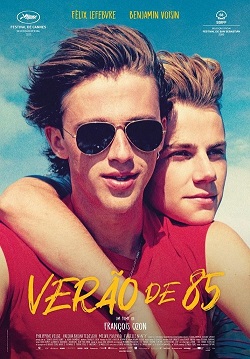
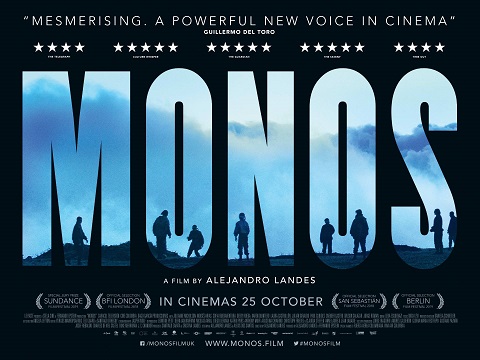
back, a review of the new film Monos caught my eye. "A
largely non-professional teen cast" are words that automatically spark
my interest. I love working with unprofessionals, and bright young
actors are just the best thing. I shall be looking out for Monos
with interest, and add it to the ever-growing list of films that I
wouldn't mind seeing.
SUMMER 2019 EDITORIAL
Well, The Here And Now is finally now finished- and will
have its premiere screening in the not-too-distant future. Needless to
say, I'm really grateful to my lovely cast and crew- all of whom I'd
work with again.
The whole film proved harder than I thought it would be to complete,
but we got there- and I can now start planning the next one! I hope it
will be a creative and enjoyable Summer, as I'm working again with Jack
Spence (he of Talk To Me fame- see my last editorial!- on HIS
second feature, and I feel priviliged to be doing so. He's also been
involved in my film and helping me stay optimistic- so my thanks to him
for that! Talking of The Here And Now ....check out the
official trailer for the film here
SPRING 2019 EDITORIAL
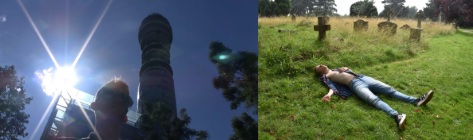
I feel honoured to have been a part of a new feature film which
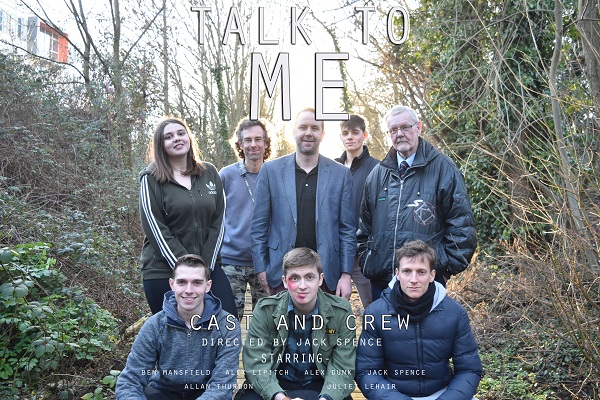
finished shooting in the last week. Talk To Me tackles a number
of sensitive and emotionally-charged topics, so it's all the more
remarkable that its writer and director, Jack Spence (lower left),
is
still
only
18.
He
also
ended
up
taking up one of the central roles
when one of the actors was forced to pull out at the eleventh hour,
making his achievement all the greater. Oh yes, and he shot AND edited
the film himself...in just four days. Having seen a rough cut of the
finished product, I feel extremely proud to have been involved. Not
only was it colossal fun to be on set, the finished film has depth,
style and beauty which are exactly what the British film industry
needs. Forget trying to emulate Hollywood- original films like this are
the real deal. So, look out for the film Talk To Me in the
press, and, if you get the chance to see it, I'd recommend that you do
so. As for the multi-talented Jack Spence, he is definitely one to
watch.
JANUARY 2019 EDITORIAL
2019 sees many music-related anniversaries, but one musical one is
that of Woodstock- which took place 50 years ago. Late last year I
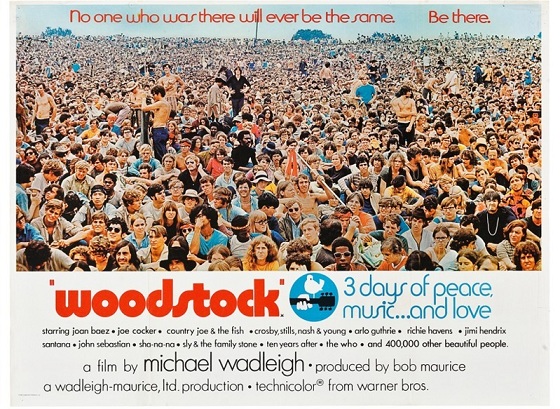
found myself dipping into Michael Wadleigh's marvellous film of the
festival which made such an impact on me as a teenager when it was
screened on TV much later. It's one of those rare films which is
audacious yet hugely pleasing, emotional yet fulfilling, and beautiful.
The music is unbeatable- and I feel fortunate indeed to have
interviewed some of the performers. I shall be thinking of the festival
again this year, and at some point re-watching Wadleigh's film in
homage.
SUMMER 2018 EDITORIAL
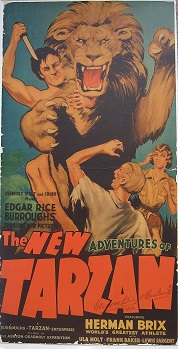
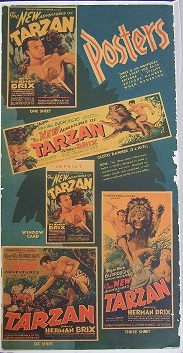
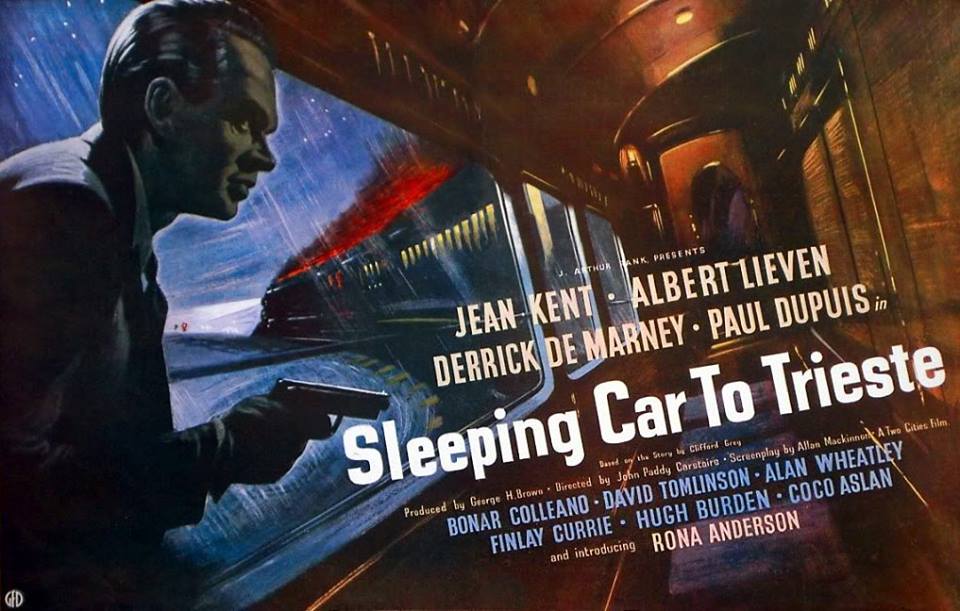
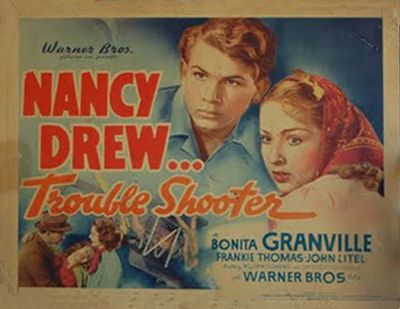
I thought I'd share with you a poster for a film I saw recently on
what I call "my favourite channel"- Talking Pictures TV (Sky channel
328, Freeview 81, Freesat 306 and Virgin 445). If you've never come
across the channel before, give it a try! They do everything film-wise
the BBC seem to have given up on, and show films that enable you to
discover little gems like this. Oh yes, and I'd LOVE the poster on my
wall!
JANUARY 2018 EDITORIAL
I had planned to write some concise comments about the first film I
saw in 2018. But, this became a mini essay of celebration- and you can
read it
here
SUMMER/ AUTUMN 2017 EDITORIAL
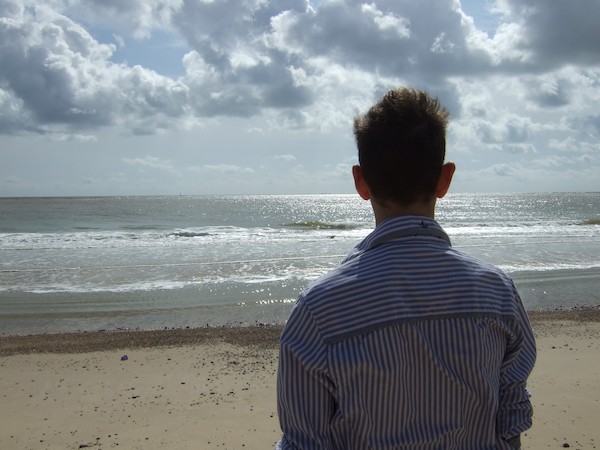
I often write about directors, but I feel very lucky indeed to know
some terrific actors. One of the things they have in common is not
realising just how good they are- making a film is creative and
artistic, but it is also FUN- and the actors I know make the whole
process such a blast I can't wait for the next time around! Here's one
of the talented actors I know in a still from a short film I'm
currently editing...
SUMMER 2017 EDITORIAL
It's funny that, despite all the technological advances, the rising
stars and the appearance of new directors, I tend to return to the old
masters- the ones that inspired me in the first place. Visconti.
Rossellini, Antonioni. Hmmm...three Italian directors. It's always been
the Arthouse cinema for me - the independent over the mainstream,
Kenneth Anger, beauty over convention, aestheticism over the mundane.
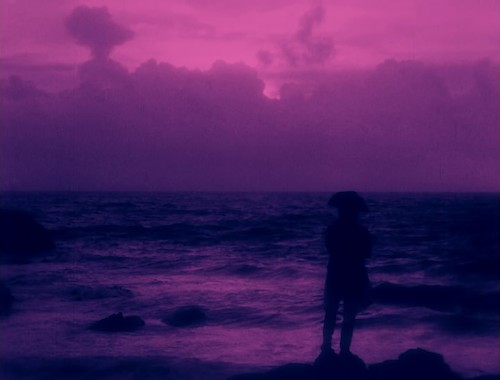
I've increased my work so much in the last few years, and have found
that I love it more as a result. The still below is from a short film I
finished earlier this year which is now on the film festival circuit.
It is called To Whom It May Concern.

SPRING 2017 EDITORIAL
I know very few people for whom 2016 was a good year. But, it is time
to banish it to the past and move forward. Lots of exciting things on
the agenda for 2017- not least planning my first feature, moving house
and finally making some shorts that have been in my mind (and actually
ON my mind) for ages!
It is perhaps apt that this year marks 90 years since the release of
Abel Gance's epic Napoleon. I was lucky enough to see some of
this magnificent work when studying History at college, as our teacher
had recorded the film on its first (and to date last) screening on
British television. I was captivated, and look forward to renewing my
acquaintance with the film as soon as is possible. (There's a
particularly good trailer- the link is below).
Talking of anniversaries, warm birthday wishes to Olivia De Havilland
and Kirk Douglas- who both turned 100 last year. Back to this year- and
have a great one. Keep in touch via social media, and there will be
more films and news coming very soon. Whatever the future holds, we
hope that it is good. Napoleon
trailer
AUTUMN 2016 EDITORIAL
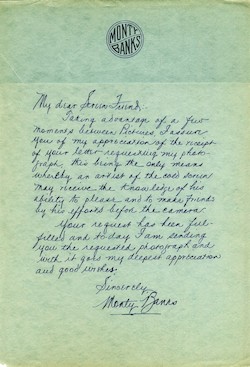
Sorting through some film memorabilia recently I came across this
fan-club letter from Monty Banks. Whether this was written by Monty
himself is doubtful (he was born in Italy, and at the time this would
have been written was still not fully au fait with English),
but its sentiments are nevertheless very worthy ones. Banks came to the
USA in 1918, and worked on a number of films directed by and starring
Roscoe "Fatty" Arbuckle. Sadly, the survival rate of these films is so
poor that Banks' skill cannot be easily assessed, but he WAS successful
enough to form his own production company and direct himself in a few
films.
When sound came to Hollywood in the late 1920s, Banks, along with many
other non-native English speaking actors, found himself cast aside. He
moved to England, and turned to directing. Monty Banks was responsible
for films starring George Formby, Gracie Fields (who was to become
Banks' second wife in 1940), and, in his last directorial outing,
Laurel and Hardy's Great Guns . Nine years later, while on a
train in Italy, he secumbed to a fatal heart attack. In Cesena, his
home town, a foundation ensures his name will live on- for it promotes
the creation of moving images from local boys.
SPRING 2016 EDITORIAL
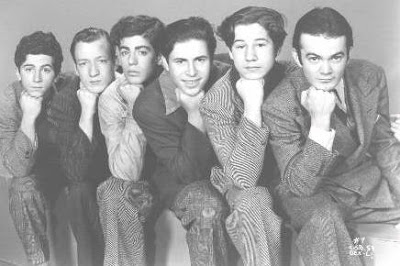
( Gabriel Dell, Huntz Hall, Billy Halop, Bernard Punsly, Bobby Jordan
& Leo Gorcey)
The Dead End Kids were something else. They had that ability- not even
given to some Oscar Winners or celebrated "stars" throughout cinema
history- of being able to lift the films they appeared in, to make the
productions even better for their presence. Although Dead End
marked their debut as an ensemble, and Angels With Dirty Faces
is their best known film together, the other five movies are less
familiar. One of these, They Made Me A Criminal was made in
1939- and involves the cream of Hollywood talent, making its relative
obscurity even more surprising. Not content with being directed by the
maestro of the musical Busby Berkeley, the film was shot by ten time
Oscar nominee James Wong Howe (he did actually win twice). The music by
Max Steiner sets a suitable backdrop to the detailed yet comprehendable
plot which also stars John Garfield, Claude Rains, Ann Southern, May
Robson- and even features minor roles for character actors like Ward
Bond and Arthur Housman. In common with all but Dead End, the
film was made and distributed under the auspices of Warner Brothers ,
making it all the remarkable (and lamentable) that DVD releases have
been limited to public domain ones. They Made Me A Criminal
packs more into its 92 minute running time than most movies twice its
length, and, though setting up the plot proper seems a little rushed,
the Dead End Kids' appearance settles things down. Like their other
more celebrated films, They Made Me A Criminal contains almost
every conceivable emotion from drama to pathos, and (perhaps more
importantly) the film is utterly unpredictable. It also has important
lessons to teach us all in how to be human, and it is this, above all,
which makes it worthy of remastering and issuing on DVD as part of a
proper box set of Dead End Kids titles to acknowledge their unique
place in Hollywood history.
OLD-FORMAT EDITORIALS. No words have been changed-
these are exactly as written at the time.
EDITORIAL FOR JANUARY 2008
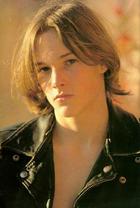
BRAD RENFRO
25th July 1982- 15th January 2008.
Whatever else the month may hold, it should be remembered for the
passing of another young Hollywood actor, Brad Renfro, well before his
time. I happened to catch a glance of the ominous MSN news headline 'US
actor found dead' as I was about to log off in the early hours of 17th
January. Feeling sure it would be someone I'd not have heard of, I
clicked the article and was additionally stunned when Renfro's name
appeared. A River Phoenix for the generation of 1990s film-goers,
Renfro's most famous role was in the thriller The Client but he
also put in memorable performances in The Cure and Apt Pupil
among others. A sad day indeed for cinema.
EDITORIAL FOR FEBRUARY 2008
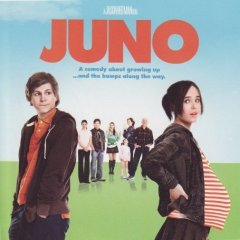
There's a revolution happening in Canada. A cinematic revolution
anyway. The forthcoming release of Juno directed by talented
Canadian Jason Reitman is yet another example of the quirky, 'Indy'
film that the Canadians (and the Americans for that matter) do so well.
In fact, the Canadian 'coming-of-age' movie could almost be considered
a sub-genre in its own right: from the emotionally draining Sugar(dir.
John
Palmer,
2004)
to
Jean-Marc
Vallee's
C.R.A.Z.Y.(2005), such
films are marked by soundtracks that mix the offbeat with the
mainstream, central characters who are subject to the vagaries of Life,
stunning locations and a reluctance to outstay their welcome. Many,
many words could be written about these stunning films and others
besides, but Juno is another in a long line of charmingly
idiosyncratic films to emanate from Canada. Vive la Revolution!
EDITORIAL FOR MARCH 2008
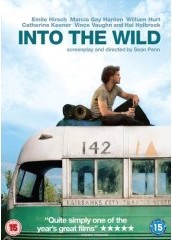
In the 2007 film Into The Wild, there is a moment when Chris
McCandless (Emile Hirsch) tells a large red apple just how tasty it is.
Then, after two jump cuts, he stares at, then leans toward, the camera.
Little did Hirsch know that this particular moment would be singled out
for IMDB analysis and debate. A very minor moment in what is a very
long film, this sort of conjecture surrounding his interaction with the
camera marks the shift away from considered critical reflection toward
an almost immediate response on behalf of- well- anyone. Now,
no sooner than a movie's credits have laboured their way up the screen,
there are private analysts trainspotting the flaws, moments of
stretched credibility and downright plot holes ready for their sixty
seconds of fame when they point it out to the whole world on IMDB. In
this case, it is interesting to note that director Sean Penn initially
refused to let Hirsch ad-lib the idea of talking to the apple (Penn's
lack of good judgement characterising most of the film)- that Hirsch
persuaded Penn to film the moment is a credit to the actor, and to
those who have the patience to trawl through IMDB looking for a
discussion of a moment such as this.
EDITORIAL FOR APRIL 2008
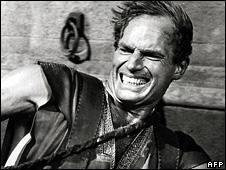
In this modern world where, it is said, young people don’t have heroes
anymore, the passing of Hollywood legend Charlton Heston should evoke
in many more than a touch of sadness. For many cinema-going youngsters
throughout the 1940s, 1950s and even the 1960s Heston was a true
celluloid icon, for he made the legends of history real, believable and
almost tangible. Those who criticise his involvement with the N.R.A.
miss the point- Charlton Heston should be revered for exactly what he
was- a legend where there are no legends, a giant where there are no
giants, and a hero where there are, it seems, no heroes. God Bless you
“Chuck”.
EDITORIAL FOR MAY 2008
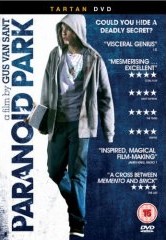
In one of my Film lectures a year or two ago, I described Gus Van Sant
as ‘the greatest living American director’ (possibly a result of seeing
My Own Private Idaho and Elephant in consecutive weeks).
Since then, I have reflected on this rather spontaneous outburst with a
certain amount of humour- he is unquestionably a brilliant director,
but that good? Van Sant’s latest film Paranoid Park,
stylishly shot yet strikingly down-to-earth, is another remarkable
experience from a man who knows how to make films that are just, well, amazing.
As
the
film
finished,
I
once
more
thought
back to that day when the
students grinned at my sudden declaration of enthusiasm, and decided
that perhaps I hadn’t been that shy of the mark after all.
EDITORIAL FOR JUNE 2008
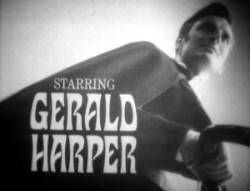
The actor Gerald Harper hasn't made many films. It wasn't until I did
some research that I found this out- it was a fact that rather shocked
me, as he really is an excellent actor. I had the good fortune to meet
Mr. Harper at the stage door during his recent appearance in Agatha
Christie's And Then There Were None, and he is one of the
nicest people I have ever met. I asked him if he had any future
projects planned, and was rewarded with a wonderful amused chuckle...
apart from another run of the play, he hadn't. True, Mr. Harper has
done much television work (most famously in the brilliant Adam
Adamant Lives!- a series which should be the official definition of
'cult' in the dictionary) but little film. If his appearance in the
play is anything to go by he can still turn on the style- and that is
often what films in this day and age are missing.
EDITORIAL FOR JULY 2008
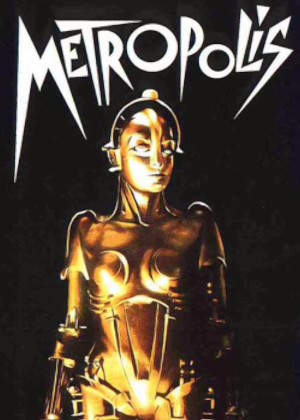
You might recognise the image, but I’d be very surprised if you’ve seen
the full version of the film…until now maybe. Metropolis is one
of the most famous works of European cinema but exists in many
different length versions. Premiered at 210 minutes back in 1927, the
film has been available in prints lasting anything from 80 minutes (the
Moroder version) to the most recent 2 ½ hour restoration. Now, with the
aid of a battered film discovered in Buenos Aires, the true Metropolis
can hopefully be reconstructed and be a lasting testimony to the genius
of Fritz Lang.
You can read more about this amazing "find" on my links page.
EDITORIAL FOR AUGUST 2008
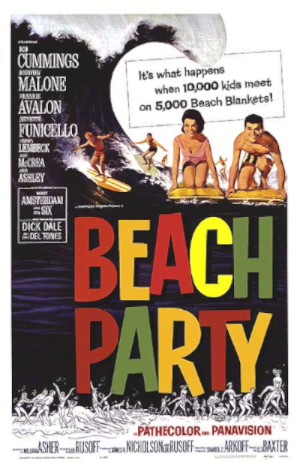
With the Summer, and the invariably capricious weather that season
brings, my thoughts turned yet again to those 1960s ‘Beach’ movies
(which in turn invariably starred Frankie Avalon and Annette
Funicello). Often panned by the critics, these movies can hopefully now
be re-evaluated both in terms of their cultural significance (as
indelibly linked to the 1960s as Italian Neorealism is to the 1940s)
and for their use of icons of popular culture (from Buster Keaton to
Mickey Rooney). Ultimately, these movies did not aim at a profound
political statement- they cashed in on the surfing craze and, in doing
so, provided entertainment not only for those who rode the California
surf but those who would like to.
EDITORIAL FOR SEPTEMBER 2008
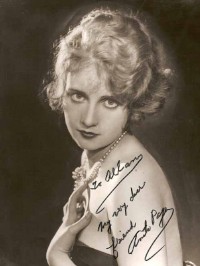
The passing of Anita Page at the age of 98 severs yet one more link
with cinema's silent past. Ironically for an actress who retired in
1936, Page's final film (Frankenstein Rising) is not yet
released, although it is one of just six she made since that
self-imposed exile from the silver screen. It is both enticing (and now
frustrating) to consider that Miss Page was part of that magic world
and knew the people who have become motion picture legends. Despite her
somewhat limited film career, Miss Page deserves to be remembered as
they all do- for theirs was the pioneering spirit that established the
form of cinematic production which is still largely in use to this day.
EDITORIAL FOR OCTOBER 2008
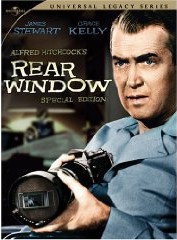
Just when you thought it was safe to start saving up for Christmas
Alfred Hitchcock makes an appearance...or rather, some of his films do,
as part of the remastered two-disc Legacy Series. One such title is Rear
Window. I already have the film on DVD- and it has extras. So, why
should I buy this new release? Two reasons- the further improved
picture quality and the host of extras (including- at last- a feature
length commentary). I suppose you'd have to be a keen Hitchcock fan to
purchase this film again, but I am a keen Hitchcock fan. Christmas will
have to wait.
EDITORIAL FOR NOVEMBER 2008
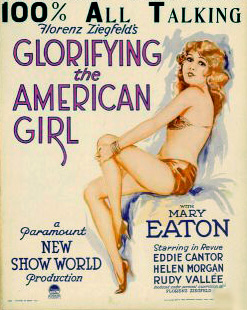
Listening to The Film Programme on BBC Radio 4 on 17th October
this year I was shocked to hear that films are still decaying in vaults
all over the world through lack of money. Call me old fashioned, but,
with the absurd sums being thrown around left, right and centre in
today's celebrity culture, that's something very wrong. There are also
films which are preserved but not yet released- one that has always
held a fascination for me is Glorifying The American Girl. Made
in 1929, and therefore pre- Hays code, it is notable for being an early
musical, its last section being shot in early technicolor and for its
spectacular sets. That this film survives in the vaults at the UCLA is
commendable, that it seems to languish there is less commendable. Film
preservation needs action- and fast, not only to preserve our rich
cultural heritage but to ensure that it lives and breathes again.
EDITORIAL FOR DECEMBER 2008

On the surface, Ingrid Bergman seems to have little to do with BBC
Radio. Actually, she may well feature in an edition of Radio 4’s
Archive Hour on 20th December at 8.00 p.m. The programme- entitled
‘Home-Recorded Voices’- takes as its premise the “domestic” recordings
made by people using the new technology of magnetic reel to reel tape
to record themselves for posterity. The majority of recordings you will
hear come from my own archive. One of the voices (belonging to a Lorna
Butler of Reading, Berks.) is represented several times in my
collection- once giving a superbly detailed description of her meeting
with Ingrid Bergman (above). Whether it will make the final cut is
uncertain- but what is certain is that the exploration of my audio
archive hits UK airwaves on the last Saturday before Christmas.
EDITORIAL FOR JANUARY 2009
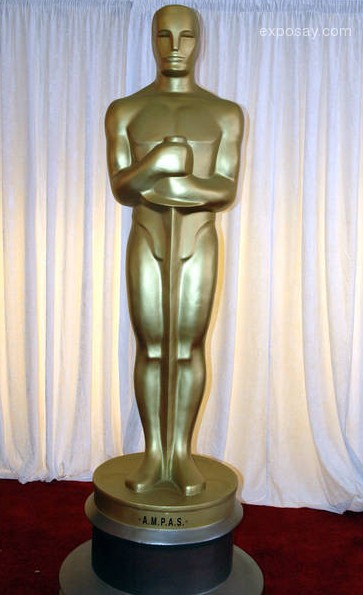
It's that time of year again- Oscar nomination time. For once, I care
about the Oscars. One film I think will be rewarded is the charming WALL-E,
but
I
also
hope
that
Gus
Van
Sant
is recognised for his film Milk.
Van Sant's films are always interesting, and often simply mind-blowing.
It's time this was recognised in a more public arena than fan sites and
forums, so I send him good luck too. I may even stay up in the hopes
that both my prediction and my wish come true.
EDITORIAL FOR FEBRUARY 2009
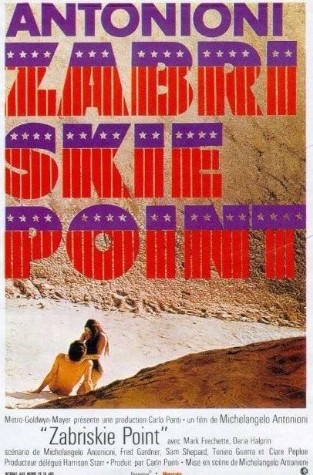
Despite the sale of films on DVD reaching its early teens it is
astonishing to note those films that (for some strange reason) have
vanished from (or have never appeared on) the radar. If it was just a
case of Darwinian natural selection, and only the best/most interesting
were released for public consumption and adulation I could perhaps
understand it. But it isn't. Thus, one can buy any mindless movie
fairly readily (even in most high street stores!) but other titles
remain frustratingly elusive. A case in point is 'Zabriskie Point'
(Antonioni, 1970), unavailable on DVD in both the UK (unsurprisingly)
and in America (amazingly). Without resorting to some dubious imported
version one's only option- it seems- is to await the occasional
screening of the film on TCM, avec logo and mit adverts. I've wanted to
see this film for years, and now have the sensation of being aware that
I soon won't be able to wait any longer. It is this situation that the
film companies should be aware of, as if the release is delayed to the
point of its audience seeking out the movie elsewhere (such as a
transfer from an old VHS video or recording it from a channel like
TCM), the very people who may be responsible for sales will hold back-
for the short term at least. If I had to name three titles I'd like to
see on DVD in the near future they'd be the aforementioned Zabriskie
Point, Gance's 1927 classic Napoleon and the 1980
Brownlow/Gill TV series Hollywood. Let's hope that whoever has
to be listening IS listening.
EDITORIAL FOR MARCH 2009
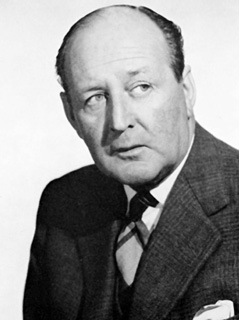
One of the indisputably great things about British cinema of a certain
era was its preponderance of character actors who would suddenly turn
up in a film of seemingly any genre. One such example is Cecil Parker,
who appeared in The Admirable Crichton (1957) on television
recently and popped up in a film I caught tonight, 1965's A Study
In Terror. Usually reminiscant of a slightly quavering but
agreeable Uncle, Cecil Parker also appears in one of my all-time
favourite films The Court Jester(1955), but it is worth noting
that in his 36 year career he appeared in films directed by some of
cinema's greatest- including his memorable appearance in The Lady
Vanishes(1938). Cecil Parker is one of those special actors whose
presence can make even the worst film bearable, but my delight is in
seeing him whatever he is in. Truly, we will never see his like again.
EDITORIAL FOR APRIL 2009
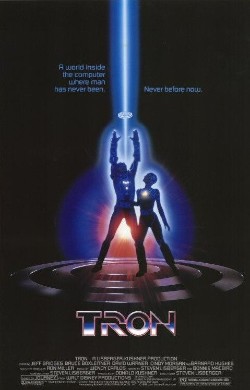
One very good thing about the school holidays is the replacement of the
usual run-of-the-mill dross (mindnumbing daytime television or live
golf coverage) with films. I hadn't intended to watch one particular
film- Tron by name- out of an odd sort of fear that it wouldn't
live up to my memories of seeing it as a small child back in the early
1980s. I need not have worried. Despite a slightly incoherent
narrative, Tron still looks stunning, its visual style unique
in a world where many things billed as "unique" aren't. I hear a remake
of the film is on the cards. 'Nuff said.
EDITORIAL FOR MAY 2009
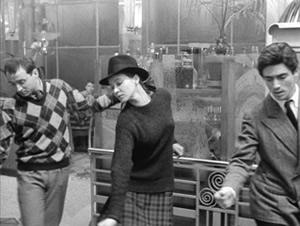
Perhaps the biggest compliment one can have is to have a biopic made
about one's life. I suspect the closest I'll get to this exalted
position is a short film (made by some of my students) entitled R7HARRIS
which is based on me and my love of film. Continually interesting, it
is one of many superb shorts I have been proud to observe taking shape
over the last two months as studies move towards their close. Despite
using both my voice and some direct interview footage, R7HARRIS
demonstrates the typically inventive modern student mind- the host of
visionary ideas each year produces never ceases to amaze and delight
me.
EDITORIAL FOR JUNE 2009

It's nice to know that the future of Britain's film industry is in safe
hands. This particular image adorns the British Film Council's short
films page with the grace and dignity that a hare has in a butchers
shop window. I'd go so far as to say that I'm as sure as eggs are bacon
that these no doubt worthy individuals will offer as much to the short
film as to the feature film in this country. Francois Truffaut once
famously remarked that 'British' and 'cinema' were slightly
incompatible...I wonder what he might make of things now.
EDITORIAL FOR JULY 2009
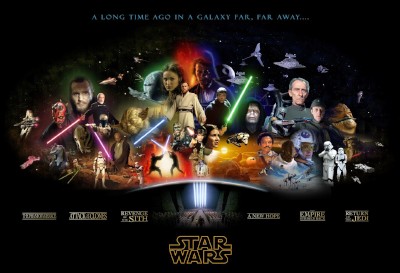
I was intrigued recently to read what on the surface looked like a
wholesale endorsement for my constant argument that your average
mainstream, run-of-the-mill movie need not outstay its welcome. The
author of the article, however, after namechecking some recent
Hollywood Blockbusters, comments thus: 'these sorts of movies would
have skirted close to the 90 minute mark a decade or so ago. Look at
the first 'Star Wars' and 'Indiana Jones' movies – they are lean, fast
paced and endlessly re-watchable. Now look at the new ones.' What is
happening here is a confusion between length and quality.
The
first
Star Wars film (1977) runs 121 minutes (125 if you
count the special edition), Raiders of the Lost Ark 119.
Therefore, they're not really that close to 90 minutes. I do get his
point though: of the three 'prequels' to George Lucas' saga, The
Phantom Menace runs for 133 minutes, Attack of the Clones
142, and Revenge of the Sith 140. What all this boils down to
is that if a movie is really good (as opposed to 'O.K.') it can
run a little longer. What I, he and no doubt most of the public out
there don't want is pretentiously long films whose content does not
merit their running time.
EDITORIAL FOR AUGUST 2009
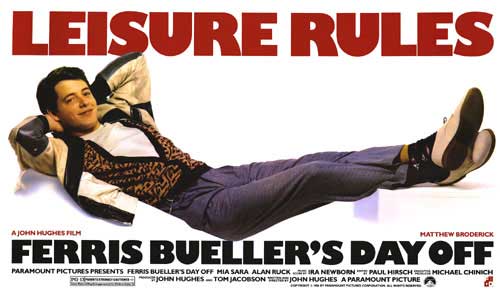
I don't know what this month's editorial would have been had I not
heard of the lamentably early death of John Hughes a couple of days
ago. Although he directed a mere 8 films, two of those are classics in
their field- The Breakfast Club and Ferris Bueller's Day Off.
I
saw
the
latter
again
about
three
years
ago after a gap of almost 20
years. To be honest, I'd avoided going back to it, fearing that what
I'd found so entrancing as a boy would now seem puerile and childishly
silly. I need not have worried. If anything, I enjoyed it more the
second time around- it was uplifting and different in the way that so
few films these days seem to be. Now I work in education, I enjoyed
watching the teachers almost as much as I did Ferris himself. John
Hughes was not a one-trick pony: he wrote, produced and directed, and
was still doing so until the end. His death, at the early age of 59, is
to be mourned- if you want to pay tribute to him in the best way
possible put on Ferris Bueller's Day Off and enjoy.
EDITORIAL FOR SEPTEMBER 2009
It seems almost inconceivable that 28th September 2009 marks the 75th
birthday of the legendary French actress Brigitte Bardot. Her reclusive
lifestyle (only disturbed by valiant outbursts against animal cruelty)
means her iconic status is assured- her image is frozen in time as the
sex kitten that took the world by storm in the late 1950s.
EDITORIAL FOR OCTOBER 2009
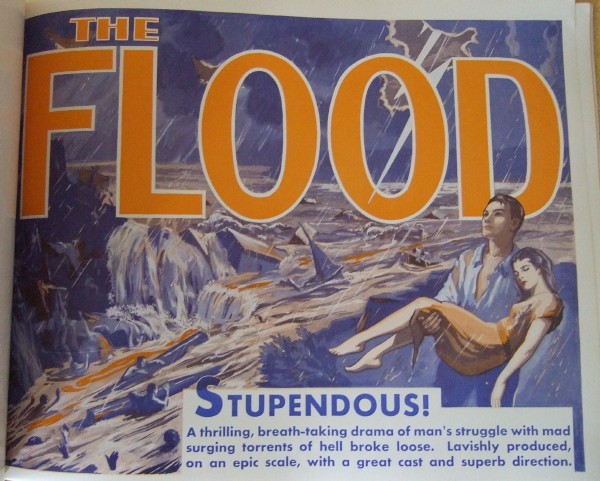
It's surprising what prompts research to take place. Looking through a
beautiful Columbia Pictures Exhibition Book from 1930-31 in my
collection I was particularly impressed by a striking full page advert
for The Flood, a film now barely remembered. Interestingly, the
advert attempts to sell the film through its spectacle rather than its
stars (Eleanor Boardman and Monte Blue- both big names in the silent
era) or its director (James Tinling, not, with the greatest respect, a
notable name), although it does hype them up in the written blurb that
accompanies the main image. Given its hype, it's a shame that The
Flood probably exists in a dusty vault somewhere, waiting, like
"the mad surging torrents of Hell", to break loose...
EDITORIAL FOR NOVEMBER 2009
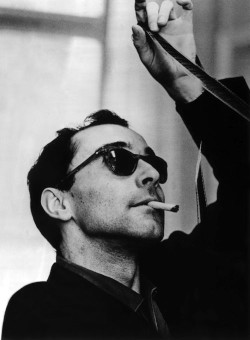
It doesn’t seem that much has happened in the film world in recent
months. There are lots of people who’d probably disagree. My (rather
reactionary) response to this is to turn back to the acknowledged
masters of the past. Thus, as the Winter evenings begin to make
venturing out a decidedly unappetising occupation, I return to
Truffaut, Godard, Antonioni- those people who guarantee to uplift the
spirits. Speaking of Godard, I was reminded only yesterday just how
quotable he was (and probably still is). ‘Cinema is truth’, the great
man once remarked, ‘twenty-four frames a second’.
EDITORIAL FOR DECEMBER 2009
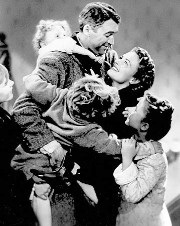
Well, it's that time of year again. I marked the occasion by a special
screening of It's A Wonderful Life where the film worked its
magic once more. As I watched, I wondered if it really was my
favourite film- it's been my pat answer to the 'favourite movie?'
question for years. The evidence- Donna Reed's finest hour, an
incredible performance from James Stewart that soars through the range
of emotions, a complex narrative web which sees itself resolved, and
what is for me a final sequence of utterly unbearable intensity. Mere
words cannot do the affective power of this justice, but what I do
know is that it tipped the balance in favour of Capra's film on this
occasion. A Happy Christmas to you all...
EDITORIAL FOR JANUARY 2010
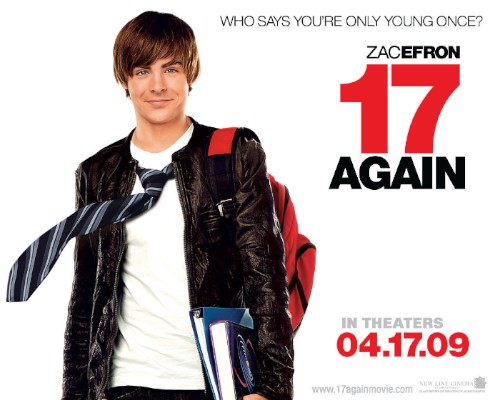
The mark of a true star, an actor or actress who will be remembered in
years to come and define their generation, is that they can still be
great even if the movie they are in isn't. Few stars have made
universally great films, but having the knack to still be a class act
in a film that most definitely isn't is the touch of genius. Watching 17
Again recently my assertion seemed truer than ever. It is not, by
any stretch of the imagination, a great film. That said, its main star
is great in it. It is his performance alone that makes the film
watchable, and, consequently, Zac Efron is one of the true stars of his
generation- one of the finest talents Hollywood currently has to offer.
EDITORIAL FOR FEBRUARY 2010
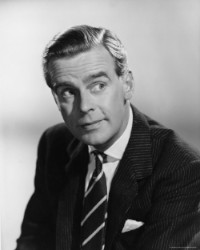
2010 has, so far, not been kind to the great and the good. In January
Jean Simmons passed away, as did Eric Rohmer. This month has already
seen the loss of Ian Carmichael, one of the mainstays of 1950s and
1960s British cinema. What was refreshing about Carmichael was his
quintessential Britishness, his often bewildered fresh-face
being seen in a plethora of films (often comedies). One of my favourite
Carmichael performances is Left Right and Centre (1959) where
he plays a Tory candidate who erroneously reveals his tactics and
biography to his political rival. Carmichael's death severs yet another
link with 1950s British cinema, and we must honour the surviving stars
while there is yet time.
EDITORIAL FOR MARCH 2010

I clasped my hands to my face and repeated ‘no, no, no…’ in a
monotonous chant, almost hypnotised by the bad news I had just read. I
then got up and unsteadily crossed the room, barely keeping my emotions
in check. If the telephone hadn’t rung at that moment I think I would
have fallen apart. It must have looked like a scene from a movie…but it
wasn’t. It was real. I had just read of the death of Corey Haim.
Intense sadness, guilt, anger- all these emotions passed through me
soon after. I was angry for the way the Hollywood machine will grind on
regardless, guilty that I hadn’t written to him to say I appreciated
his work, but above all I was (and still am) sad. Corey Haim was one of
THE symbols of the 1980s teen movie. With his passing, in an odd way, a
little of me died too.
Corey Haim 23/10/1971-10/3/2010
EDITORIAL FOR APRIL 2010
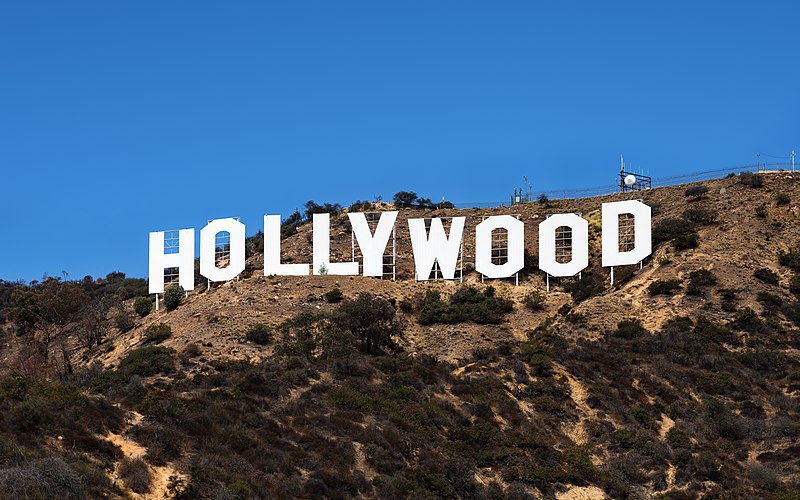
Life is not quite as sunny in Hollywood as it once was. The reason? The
financial cost involved in preserving the sign proclaiming a name now
synonymous with the movies themselves. Erected in 1923, the sign’s
chequered history (Peg Entwistle jumping to her death from its first
letter for example) and gradual weathering led to the removal of the
original suffix ‘land’ from the sign. Now, another problem rears its
ugly head- several ugly heads to be precise- those of “investors” (=
cultural highwaymen) whose future actions will be a result of their
palms being crossed (or not) by £2 Million (approx. $3.5 Million).
Moral bickering aside, it’s time to get real. Avatar cost $500
Million. The sign needs $3.5 Million. With movie salaries and budgets
rising higher than a skyrocket on acid it’s time to act. Should today’s
multi-million dollar celebrities give up some small change to save this
landmark sign? I’d say yes- for it was probably the very magic the sign
inspired that helped motivate them to get where they are today.
(Photo credit: Thomas Wolf, www.foto-tw.de / Wikimedia Commons / CC
BY-SA 3.0 )
EDITORIAL FOR MAY 2010
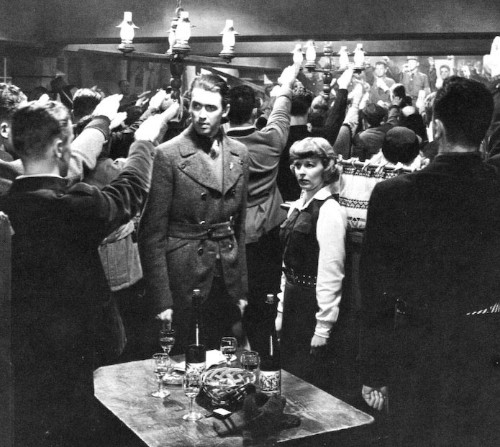
James Stewart and Margaret Sullivan stand amazed. This is not the
result of a straw poll to discover who thought the recent version of Clash
of
the
Titans was the original (check out the 1981 Desmond
Davis classic if you, dear reader, would also raise your hand).
Instead, it is a show of support for the Nazis who have suddenly come
to power- and upset the status quo as a result. The film is The
Mortal
Storm and I have only recently been reunited with this 1940
Frank Borzage classic after seeing it getting on for 15 years ago at a
cinema in the South of England. It made a profound impression on me
then, and (I was pleased to discover) weaved its magic again recently
when I acquired it on DVD as part of the ‘Warner Archive’ series. For
those not acquainted with this particular strand, the studio has
decided to produce “no frills” versions of some niche market interest
titles and burns them to order as orders come in. Thus, it really is a
personalised service, and, apart from the many joys of the film itself,
there is something deeply satisfying in this.
EDITORIAL FOR JUNE 2010
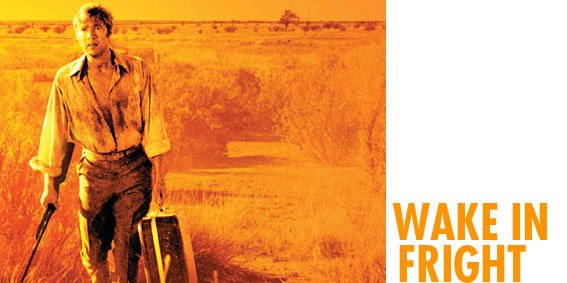
I have to confess that I don’t have a vast experience of Australian
films. Those I have seen include The Piano (which bored me so
much at the time I’ve not been back to it), but I’m very keen to see Wake
In
Fright (1971) whose remarkable story I came across on one of my
random web surfs. In short, the director of the film, whilst on a quest
for a watchable copy of the film, followed up lead after lead which
took him to Pittsburgh- where he came across the original reels about
to be destroyed! Luckily, this story does have a happy ending- and the
film is now out on DVD.
EDITORIAL FOR JULY 2010
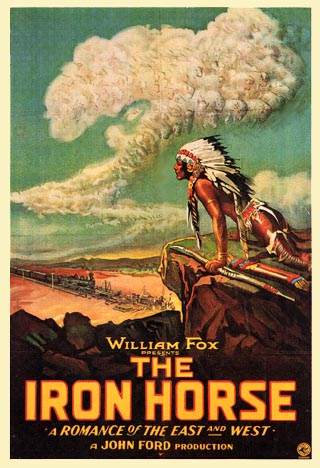
The 15th San Francisco Silent Film Festival takes place between 15th
and 18th July, and a mouthwatering programme is in prospect. If it were
not enough to be showcasing the magnificent John Ford epic The Iron
Horse the Festival is screening the recovered (and reconstituted)
version of Metropolis, which, at 148 minutes, is as close to
Lang's original cut as we're likely to get...for now! Looking across
the other films that are showing, my biggest complaint is that, due to
pressure of work, I am unable to be there. Maybe next year.
EDITORIAL FOR AUGUST 2010
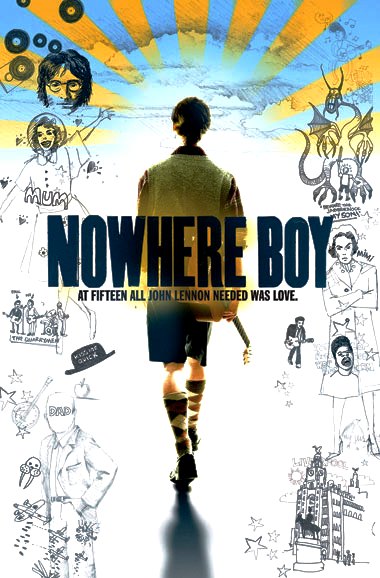
As a passionate cineaste, I would have suspected that the recent demise
of the UK Film Council would have filled me with greater horror/ shock/
outrage than it actually did. True, it funded many successful films
(even if some were a million lightyears away from past glories-
Bend It Like Beckham is one film that springs readily to mind as
endorsing Truffaut’s famous statement about the British and cinema). On
the negative side, I’m not sure it did much for films at a grass roots
level- preferring to farm out such niceties as funding to regional
agencies (who seem to have the same dubious politics as their parent).
My biggest question is not ‘why was it abolished?’ but, to weave in a
line from Spike Milligan’s feted Q programmes, ‘what are we
going to do now?’
EDITORIAL FOR SEPTEMBER 2010
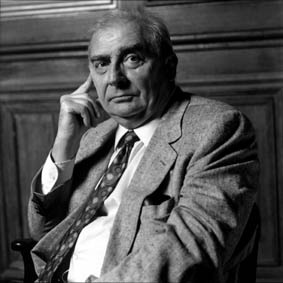
It is inevitable, one supposes, that with the passing of time the old
masters, the legends of the Arts, will pass away. The world of cinema
that tonight mourns the French auteur Claude Chabrol has
suffered the loss of four such major figures in the last few years-
namely Fellini, Antonioni, Rohmer and now Chabrol. The last two are
significant in that they leave only Rivette (now 82) and Godard (80) as
survivers of the Cahiers critics who initiated the Nouvelle
Vague. What else is there to say? For once, I am not quite sure.
EDITORIAL FOR OCTOBER 2010
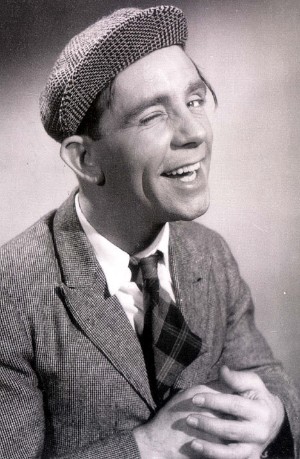
The latter part of 2010 has not been kind to cinema greats. Hard on the
heels of the passing of Claude Chabrol (the subject of last month's
editorial), we mourn Tony Curtis and now the British comedy legend
Norman Wisdom. Curtis' legacy is relatively assured, thanks to his more
famous movies, but it will be interesting to see how the films of
Norman Wisdom are now viewed. I have always argued that his films are
unpretentious, gentle and actually often very clever- blending in
sentimentality with a very British wit. Newspaper reviews have, though,
felt otherwise. Given the hypocrisy of certain so-called film critics,
I shall watch with curiosity whether his passing signifies a timely
re-evaluation of his cinematic output.
EDITORIAL FOR NOVEMBER 2010
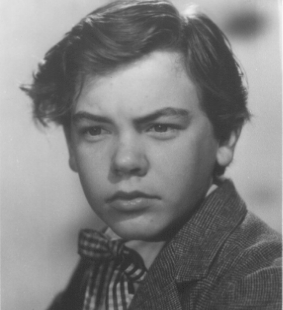
One of the aspects of my lectures is getting over to students the
necessity of research, and the foolishness of making unsubstantiated,
vacuous statements. Unfortunately, their success in avoiding these is
not shared with the Radio Times, whose standard of film
reviewing has plummeted in quality (ironically, in step with the
decline in the screenings of interesting films- perhaps there’s a link
there?). In a recent issue, criticism of the 1950 Treasure Island
was confined to Bobby Driscoll ‘the worst sort of precocious American
child star’, making me wonder whether the so-called critic had actually
watched the film- for Driscoll is undeniably excellent throughout in
his open-eyed wonderment. It would be cruel to single out this one
(presumably inexperienced) hack writer (but step forward Adrian Turner-
for This Is Your Moment) for his puzzling statement. Even if Driscoll
were “precocious” (the evidence is, obviously, not forthcoming in
Turner’s piece), this epithet could be applied to virtually every
child star (American or not!) at some point. I have three pieces of
advice for Mr. Turner- that he read even one of several child star
books (as well as my own research), that he think carefully what he
says before saying it in future, and that he avoids the films of
Shirley Temple- another who might fit his dubiously named clock of ‘the
worst sort of precocious American child star’.
EDITORIAL FOR DECEMBER 2010
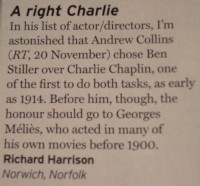
The end of the year is here- and with it a bizarrely large amount of
self-publicity. To begin with, the letter in Radio Times (which
created interest among my fellow lecturers!). Then, my longest film (God
Given
Right) was completed. Finally, more projects are reaching
some sort of tangible form- 2011 promises to be a hectic, but hopefully
satisfying, year. In the meantime, may you and your loved ones remain
safe and happy this Christmas.
EDITORIAL FOR JANUARY/FEBRUARY 2011
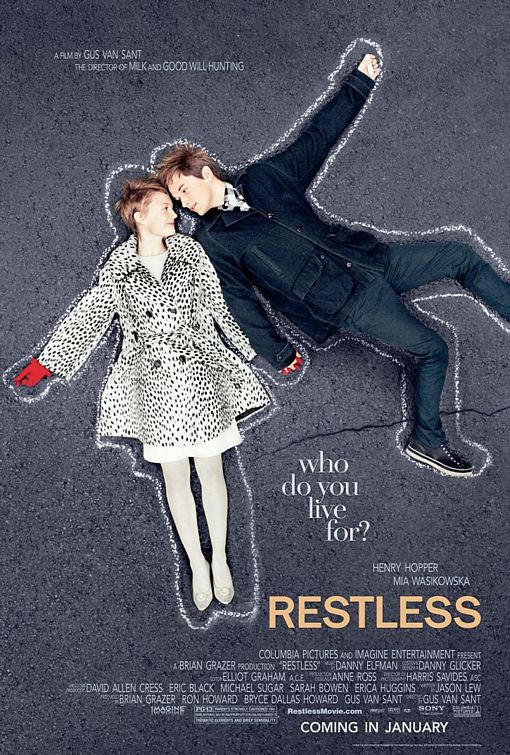
I can't remember a busier start to a year. Bizarrely, given the general
state of chaos, I've found time to look forward to the latest offering
from Gus Van Sant, Restless, due for release later this year.
In the meantime, everything else is continuing- and, with luck, other
matters will calm down in order for me to get round to seeing Restless
before too long.
EDITORIAL FOR MARCH 2011
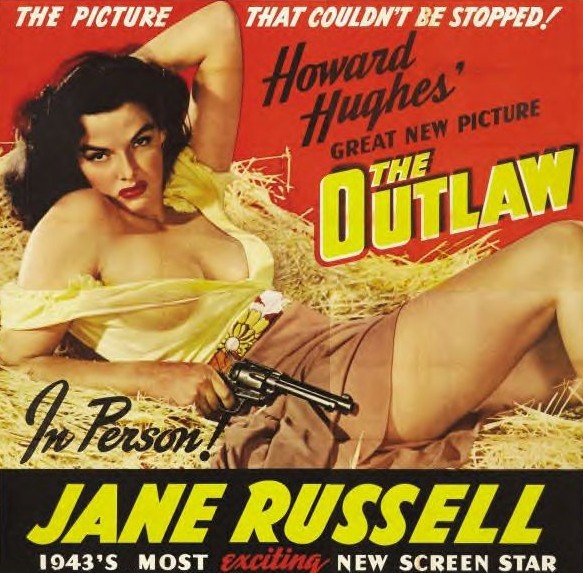
The one and only compensation for the passing of Jane Russell- a
legendary name of the fast-dwindling surviving stars of the so-called
'Classical Hollywood Cinema'- was that the BBC might screen The
Outlaw. Although probably Russell's most iconic role, the film has
previously only been available in poor quality transfers and "dupes" of
16mm. prints. In the tribute to the actress on BBC News, several clips
were shown from the film, suggesting it had been remastered.
Unfortunately, when it was screened I was out on a film shoot.
Fortunately, the DVD recorder seems to have done its job- and I shall
be able to comment further on the visual quality when I find time to
watch The Outlaw.
Books | DVDs
| Links | IMDB
Reviews | Biography | Homepage